
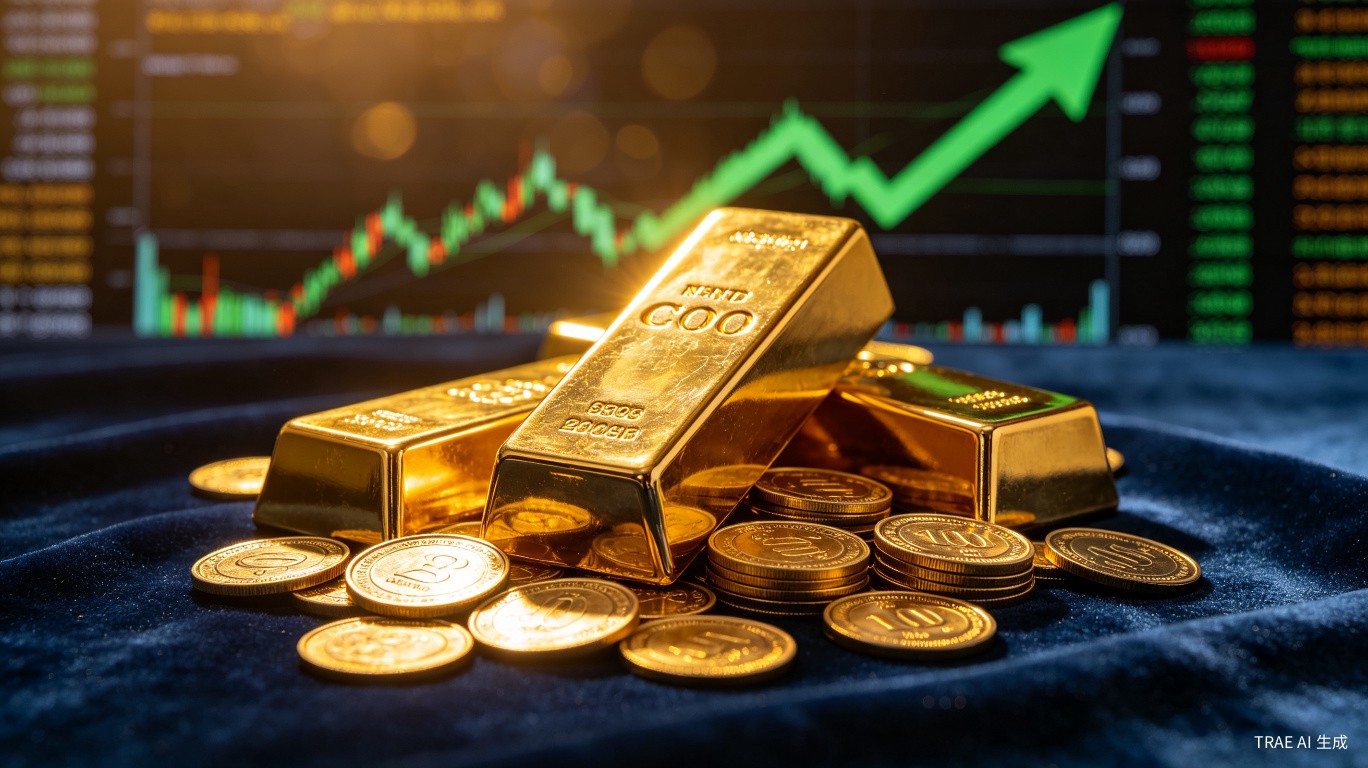
Gold Breaches $3,500 as Geopolitical Risks Escalate
Spot gold crossed the $3,500 threshold on Tuesday, June 16, settling at $3,527.40 per ounce by the close of New York trading. The rally accelerated after a series of escalating diplomatic incidents in the Middle East and Eastern Europe raised fears of supply disruptions across energy markets and broader financial contagion. The CBOE Volatility Index, Wall Street's so-called fear gauge, climbed above 28 for the first time since March, triggering a broad rotation out of equities and into traditional haven assets.
"Gold is doing what gold does best," said Maria Hernandez, chief commodities strategist at Goldman Sachs. "When uncertainty grips the global system, investors reach for the one asset that has no counterparty risk and a track record spanning 5,000 years. We are seeing institutional flows that we last observed during the 2008 financial crisis." The rally was broad-based, with mining equities advancing 8 to 12 percent on the week and gold-backed exchange-traded funds recording their largest single-week inflows since January.
Central Bank Buying Remains a Structural Backbone
Behind the tactical safe-haven flows lies a deeper structural driver: the relentless accumulation of gold by central banks around the world. Data from the World Gold Council released last week showed that central banks added 286 metric tons of gold to their reserves in the first quarter of 2026, a 14 percent increase over the same period in 2025. The People's Bank of China led the charge with 72 tons, followed by the central banks of Poland, India, and Turkey.
This trend reflects a strategic pivot away from dollar-denominated reserves that began in earnest after the sanctions imposed on Russia in 2022. "Central banks are engaged in a multi-year de-dollarization campaign," explained David Chen, head of Asia-Pacific fixed income at JPMorgan Asset Management. "Gold is not just a hedge against inflation anymore. It is a geopolitical hedge against the weaponization of the financial system." Emerging-market central banks now hold roughly 22 percent of their total reserves in gold, up from 12 percent a decade ago.
The sustained buying from official-sector accounts has created a price floor that private investors did not have to worry about in previous cycles. Even during the sharp correction in April and May, when gold fell nearly 20 percent from its January peak of $5,100 to a low of $4,100, central banks continued to buy into the weakness, absorbing selling pressure from hedge funds and speculative traders.
Federal Reserve Policy Shift Fuels Momentum
The Federal Reserve's evolving policy stance has provided additional fuel for the gold rally. Following a string of weaker-than-expected U.S. economic data in May and June, markets are now pricing in a 72 percent probability of a quarter-point rate cut at the September Federal Open Market Committee meeting, according to CME FedWatch data. A growing minority of traders are even betting on a 50-basis-point reduction as manufacturing activity contracts for a fourth consecutive month and consumer confidence slips to its lowest level since November 2023.
Lower interest rates reduce the opportunity cost of holding non-yielding assets like gold and typically weigh on the U.S. dollar, making dollar-denominated bullion cheaper for overseas buyers. The dollar index has fallen 3.2 percent since the start of June, accelerating the gold rally in the process. "The macro narrative has turned decisively in gold's favor," said Rebecca Torres, senior metals analyst at UBS. "Between falling real yields, a weakening dollar, and elevated geopolitical risk, we have the classic trifecta for a sustained bull run in precious metals."
Institutional Investors Rotate Back into Bullion
Large institutional investors, many of whom had reduced their gold exposure during the April correction, are now scrambling to rebuild positions. Data from the Commodity Futures Trading Commission shows that money managers increased their net long positions in COMEX gold futures by 38,000 contracts in the week ending June 13, the largest weekly increase in 18 months. Pension funds and sovereign wealth funds, typically slower to move than hedge funds, have also begun increasing allocations.
Harvard University's endowment announced this week that it had raised its gold allocation from 3 percent to 7 percent of its total portfolio, citing "unprecedented uncertainty in the global reserve currency system." Norway's Government Pension Fund Global, the world's largest sovereign wealth fund, signaled it may follow suit in its quarterly rebalancing later this month. "What we are witnessing is a legitimacy shift," said James Foster, a portfolio manager at BlackRock's global allocation team. "Gold is no longer viewed as a fringe asset. It is increasingly part of the core strategic portfolio."
Technical Outlook: Analysts Eye $5,000 by Year-End
From a technical perspective, gold's breakout above $3,500 is significant for several reasons. The level represented the 61.8 percent Fibonacci retracement of the January-to-April decline, and its decisive breach opens the path toward the psychological $4,000 mark in the near term. Beyond that, analysts at both JPMorgan and Goldman Sachs have maintained their year-end 2026 targets of $6,300 and $5,800 respectively, with the caveat that a sustained escalation in global tensions could push prices higher sooner.
"The bear case for gold right now is essentially a soft-landing scenario where inflation falls without a recession," said Torres. "But every data point we are seeing suggests the economy is slowing faster than the Fed anticipated. If we enter a recession with rates still above 4 percent, gold could easily trade above $4,500 before the fourth quarter." The World Gold Council noted that global gold demand reached a record 1,347 tons in the first quarter alone, driven by a combination of central bank buying, jewelry consumption in Asia, and investment demand from Western institutions.
Risks to the outlook remain, however. A sharp recovery in the U.S. economy or a rapid resolution to current geopolitical flashpoints could reverse the safe-haven premium. Some analysts also caution that speculative positioning has become crowded, raising the risk of a sharp pullback on any positive macroeconomic surprise. But for a growing number of market participants, the structural case for higher gold prices appears stronger than at any point in the past decade.