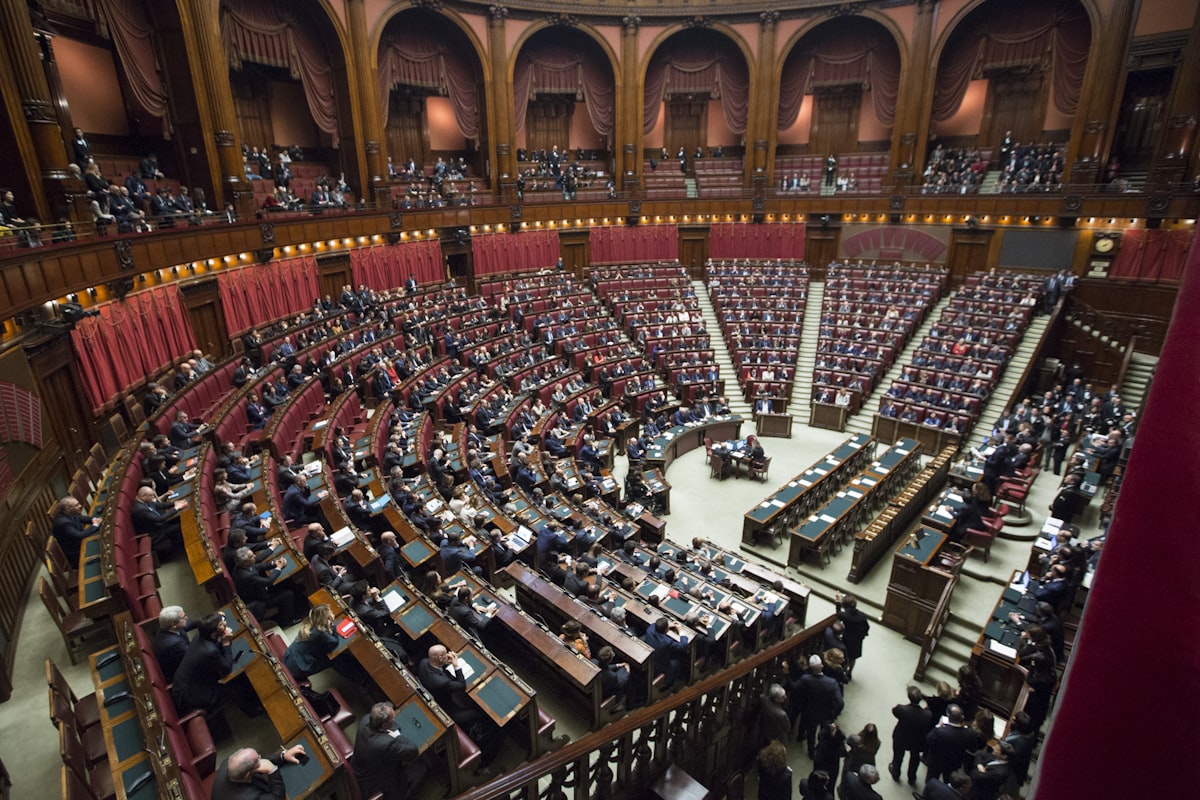
The Setting: Évian's Symbolic Weight
The choice of Évian-les-Bains was deliberate. The town on the southern shore of Lake Geneva hosted the 1938 Évian Conference, where 32 nations gathered to address the Jewish refugee crisis — and famously failed to act. Macron's selection of the venue was intended as a reminder of what happens when democracies retreat from collective responsibility. "We chose Évian not for its mineral water but for its history," said a senior French diplomatic official who briefed reporters on condition of anonymity. "The lesson of 1938 is that inaction has consequences. We hope this summit writes a different chapter."
The symbolism, however, has been overtaken by reality. The agenda that Macron's team spent six months assembling — climate finance, AI governance, global health preparedness, and Ukraine — has been complicated by disputes that no amount of diplomatic choreography can hide. Trump's tariff regime, which now affects imports from 60 nations, has strained relationships with every G7 partner. The European Union faces a 20 percent tariff on exports to the United States. Canada confronts a 25 percent tariff on automotive imports. Japan's semiconductor exports face additional levies. "The G7 was designed for countries that agree on fundamentals," said Thomas Wright, a senior fellow at the Brookings Institution. "That agreement no longer exists."
The Trump-Putin Call: Shadow Over the Summit
Before the formal sessions began, the summit was already defined by a conversation that took place outside it. On the afternoon of June 15, roughly two hours before Air Force One touched down at Geneva Airport, Trump spoke by phone with Putin for 55 minutes. The call, confirmed by the White House in a terse statement, covered "the ongoing situation in Ukraine and areas of mutual concern." No further details were provided, though Kremlin spokesperson Dmitry Peskov described the conversation as "constructive and substantive."
The call unsettled European leaders, who learned of it through media reports rather than through diplomatic channels. "We were not informed in advance," said a senior German official. "That is not how allies behave." The conversation revived concerns about Trump's willingness to negotiate bilaterally with Putin on Ukraine, potentially sidelining European interests and Ukrainian sovereignty. Ukrainian President Volodymyr Zelensky, who is not a G7 member but was invited to participate in a session on European security, issued a statement reiterating that "no decisions about Ukraine can be made without Ukraine."
The timing of the call — immediately before a summit where Ukraine was a central agenda item — was read by analysts as intentional. "Trump is signaling that he doesn't need the G7 to conduct foreign policy," said Angela Stent, a Russia scholar at Georgetown University and author of "Putin's World." "He can pick up the phone and call Putin directly. The multilateral forum is, for him, theater. The real diplomacy happens elsewhere."
AI Regulation: The Emerging Framework
Among the substantive issues on the agenda, artificial intelligence regulation has emerged as the area where the G7 has the most potential for concrete progress. The Évian summit builds on the "Hiroshima AI Process," launched at the 2023 G7 summit in Japan, which established voluntary guidelines for AI development. France is pushing for a more binding framework that would require AI companies to disclose training data sources, undergo independent safety evaluations, and implement watermarking systems for AI-generated content.
The United States under Trump has resisted binding commitments, favoring industry self-regulation and voluntary standards. The European Union, which enacted the AI Act in 2024, seeks to extend its regulatory model globally. Japan and the United Kingdom occupy middle positions, favoring coordination without mandates. "The question is whether the G7 can agree on principles that have teeth," said Marietje Schaake, a former European Parliament member who now directs Stanford's Cyber Policy Center. "Voluntary guidelines without enforcement are just press releases."
The draft communiqué, which has been under negotiation for weeks, reportedly contains language on "responsible AI development" and "cross-border coordination on safety standards," but omits the binding enforcement mechanisms that France and the EU had sought. The compromise reflects the broader dynamic at the summit: agreement on rhetoric, division on substance. "We can all agree that AI should be safe," said a Japanese official involved in the negotiations. "We cannot agree on who gets to decide what 'safe' means."
Trade Tensions: The Elephant in the Room
Trade disputes hang over every session at Évian, even those nominally about other topics. Trump's tariff regime — which the administration frames as a necessary correction to decades of unfair trade practices — has imposed costs on every G7 partner. The EU's retaliatory tariffs on American agricultural products and bourbon have raised prices for European consumers. Canada's counter-tariffs on American steel and aluminum have strained a bilateral relationship that both sides describe as the closest in the world. "The tariffs are not an abstraction in these meetings," said Canadian Prime Minister Mark Carney. "They affect real workers, real businesses, and real friendships."
European leaders have arrived in Évian with a dual strategy: avoid a public confrontation with Trump that could trigger further escalation, while privately pressing for tariff relief on specific sectors. German Chancellor Friedrich Merz has prioritized automotive tariffs, which threaten Germany's export-dependent economy. Italian Prime Minister Giorgia Meloni, who has cultivated a personal relationship with Trump, has positioned herself as a potential mediator. "Meloni is the closest thing to an interlocutor that the EU has in the White House," said Nathalie Tocci, director of the Italian Institute of International Affairs.
The trade tensions have a cultural dimension that extends beyond economics. The G7 was founded on the premise that democratic nations share not just strategic interests but values — free markets, rule of law, individual liberty. When those nations impose tariffs on each other, the implicit message is that shared values do not override national economic interests. "The G7 is experiencing an identity crisis," said John Kirton, director of the G7 Research Group at the University of Toronto. "It was built for a world where democracies cooperated. The current reality is that democracies compete."
Climate: Ambition Meets Resistance
Climate change, a standing G7 agenda item since the 2005 Gleneagles summit, has become one of the most contentious issues in Évian. The European members, led by France and Germany, are pushing for reaffirmation of the Paris Agreement targets and a commitment to triple global renewable energy capacity by 2030. The United States, which withdrew from the Paris Agreement for the second time under Trump, has resisted language that implies endorsement of the accord's framework.
The negotiating gap is significant. Draft text reviewed by HotTrends shows that European negotiators proposed language committing G7 members to "reduce greenhouse gas emissions consistent with limiting global warming to 1.5 degrees Celsius." The U.S. delegation rejected the 1.5-degree reference, proposing instead a commitment to "developing and deploying clean energy technologies that create jobs and reduce costs for consumers." The reframe shifts the focus from emission targets — which require politically costly policy changes — to technology investment, which is politically popular regardless of climate outcomes.
The climate debate at Évian reflects a broader realignment. The G7 nations collectively account for roughly 30 percent of global carbon dioxide emissions, down from 45 percent two decades ago as China and India have industrialized. Even if every G7 member met its Paris commitments — which none currently are — the impact on global temperatures would be limited without action from emerging economies. "The G7 can't solve climate change alone," said climate economist Nicholas Stern of the London School of Economics. "But it can set the direction. If the G7 retreats, others will follow."
Early Departures and Low Expectations
The summit's final day, June 17, will proceed without its most prominent attendee. Trump is scheduled to depart Évian on the evening of June 16, cutting his participation to roughly 30 hours — the shortest G7 attendance by a U.S. president since the format began. The White House cited scheduling conflicts, though European officials noted that the departure coincides with the release of a joint statement that the U.S. delegation has been working to soften on language related to trade and climate.
The early departure has become a metaphor for the summit itself: the world's most powerful democracy, present but not fully engaged. Macron has sought to manage expectations, telling Le Monde in a pre-summit interview that "success at Évian is not measured in communiqués but in conversations." By that standard, the summit may yet produce results. Bilateral meetings on the sidelines often generate more progress than plenary sessions, and the presence of seven leaders in one location creates opportunities for informal problem-solving that no video call can replicate.
But the structural challenges facing the G7 are not problems that conversation alone can solve. The rise of artificial intelligence requires coordinated governance. Climate change demands collective action. Trade wars need mediation. And the war in Ukraine, now in its fourth year, shows no sign of resolution. The G7 remains the most powerful economic bloc in the world, commanding roughly 44 percent of global GDP. Whether it can translate that economic weight into diplomatic influence — in Évian and beyond — depends on whether its members can rediscover the common purpose that once made the club worth joining.