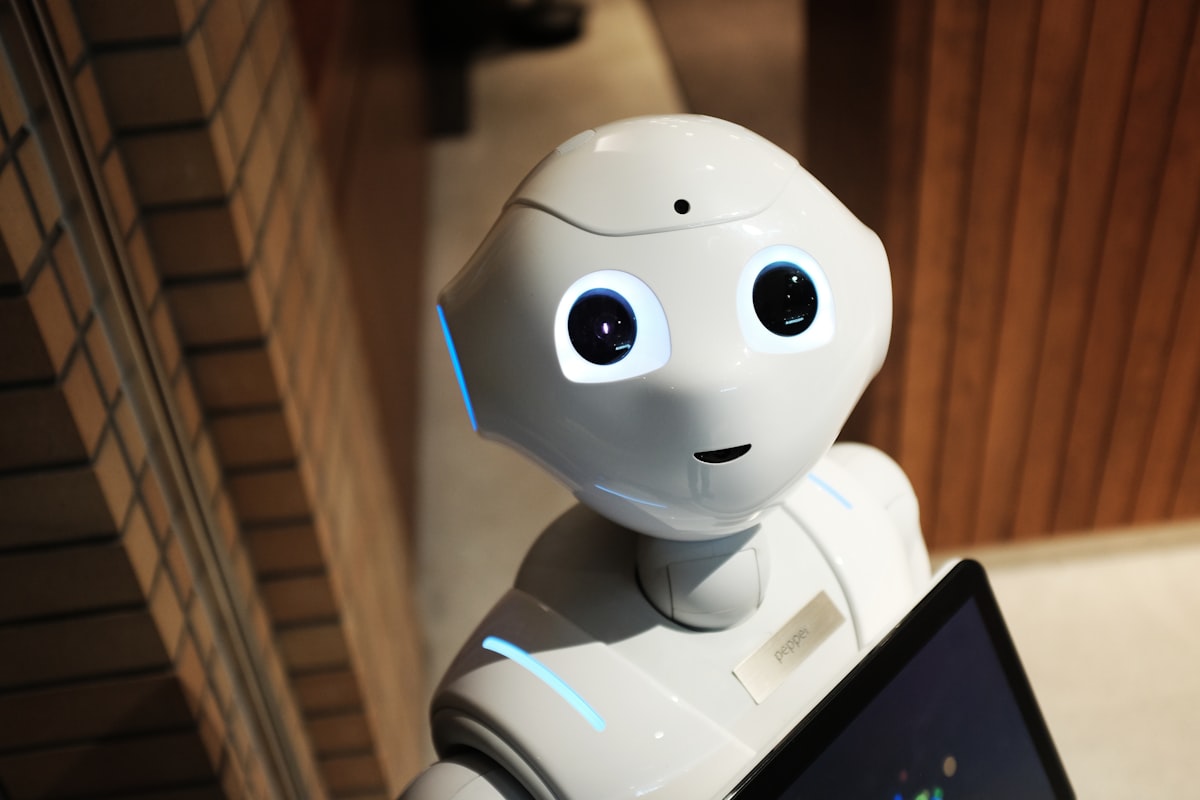
NVIDIA Omnigrasp: Teaching Robots to Pick Up Anything
The Best Paper Award at CVPR is the field's most coveted academic honor, and this year it went to a team of nine researchers from NVIDIA Research, Carnegie Mellon University, and the University of Washington for Omnigrasp, a system that enables robotic hands to grasp objects they have never seen before. The key innovation is a "universal grasp policy," a neural network trained on 2.3 million simulated grasping episodes across 18,000 distinct object geometries. When deployed on a physical robot, the policy achieved a 94.6-percent success rate on novel objects, surpassing the previous state of the art by 11 percentage points.
NVIDIA CEO Jensen Huang, who attended the conference for the first time since 2019, described Omnigrasp as "the beginning of general-purpose robotic manipulation." The system runs on NVIDIA's Isaac robotics platform, which the company says now has over 160,000 registered developers. "We built Isaac to be the operating system for robotics the way CUDA became the operating system for GPU computing," Huang told reporters during a press briefing. "Omnigrasp proves the approach works in the real world, not just in simulation."
ARC Prize: $600,000 for Cracking General Intelligence
The ARC Prize, founded by former Google AI researcher Francois Chollet to reward systems that demonstrate genuine abstract reasoning rather than pattern memorization, awarded its largest purse yet at CVPR 2026. A team from Tsinghua University and the Beijing Academy of Artificial Intelligence claimed $350,000 for achieving a score of 78.4 percent on the ARC-AGI-2 benchmark, a version Chollet designed to be resistant to brute-force training. The second-place prize of $150,000 went to a startup called Reasoning Machines, based in Zurich, which scored 71.2 percent.
Chollet, who served as lead judge, noted that no system has yet reached the 85-percent threshold he considers indicative of human-level abstraction. "We are closing the gap, but the last 10 percent may be harder than the first 70," he said during the award ceremony. The ARC Prize has become a bellwether for progress toward artificial general intelligence, and this year's results suggest that while narrow AI capabilities continue to advance rapidly, the ability to generalize from limited examples remains an open problem. The remaining $100,000 was split among three honorable-mention teams.
ByteDance MatAnyone and the Generative Media Arms Race
Among the most practically impactful demonstrations at CVPR 2026 was ByteDance's MatAnyone, a real-time video matting system that can separate a human subject from any background without a green screen. The system processes 4K video at 30 frames per second on a single consumer-grade GPU, a feat that would have required a dedicated studio setup just two years ago. MatAnyone uses a transformer-based architecture trained on 400,000 video clips annotated with pixel-level segmentation masks, a dataset ByteDance says is ten times larger than any previously published matting corpus.
The implications for content creation are immediate. TikTok creators and professional video editors could replace background removal tools like Runway ML and Adobe's Rotobrush with a system that produces cleaner edges and handles translucent materials like hair and lace with minimal artifacts. "This is the kind of research that moves from the conference floor to a shipping product in six months," said Deqing Sun, a senior research scientist at Google who reviewed the paper. ByteDance has not announced a public release date, but sources familiar with the project say integration into CapCut, the company's flagship video editing app, is planned for Q4 2026.
Michael Black and the Longuet-Higgins Prize
The Longuet-Higgins Prize, awarded annually for a CVPR paper whose impact has been recognized over a decade, went to Michael Black for his 2015 paper introducing the SMPL body model. That work, co-authored with six collaborators, created a statistical model of human body shape and pose that has since become the backbone of virtually every human-mesh reconstruction system in use today, from Hollywood visual effects pipelines to fitness tracking applications and virtual try-on tools for e-commerce.
"Michael's work gave the field a shared language for talking about the human body in 3D," said Angjoo Kanazawa, an assistant professor at UC Berkeley who was one of Black's former students. "Before SMPL, every lab reinvented the wheel. After SMPL, everyone could build on a common foundation." Black, who holds dual appointments at the Max Planck Institute and the University of Tubingen, used his acceptance speech to call for greater investment in embodied AI research. "Computer vision has solved the seeing part," he said. "Now we need to solve the doing part."
NSF Names AI a Decade-Long Priority
In a keynote address delivered on the conference's final day, National Science Foundation Director Sethuraman Panchanathan announced that AI will be designated a "key research priority" for the foundation's fiscal years 2026 through 2030. The designation unlocks an additional $2.4 billion in directed funding over the five-year period, bringing the NSF's total AI investment to an estimated $7.8 billion. The money will flow through three channels: $1.2 billion for fundamental research in machine learning theory and algorithms, $800 million for AI applications in science and engineering, and $400 million for workforce development and ethical governance studies.
The announcement drew praise from the research community but also raised questions about allocation. "Funding is welcome, but the distribution matters more than the headline number," said Fei-Fei Li, co-director of Stanford's Human-Centered AI Institute. "We need to make sure smaller universities and minority-serving institutions have access, not just the top-five labs." Panchanathan acknowledged the concern, pledging that at least 30 percent of the application-focused funding would be reserved for institutions outside the top 25 research universities. The NSF also announced a new partnership with DARPA to co-fund "moonshot" projects in embodied AI, a category that includes robotics, autonomous systems, and AI-driven scientific discovery.
What the Papers Tell Us About Where AI Is Heading
Beyond the marquee awards, the 2,641 accepted papers at CVPR 2026 reveal several broader trends. Robotics-related submissions surged 47 percent year over year, reflecting the field's growing confidence that computer vision models are mature enough to control physical systems. Papers on AI for biology and drug discovery rose 31 percent, driven by the success of protein-structure prediction tools like AlphaFold 3 and their downstream applications in molecular dynamics. Generative-model papers, while still the single largest category at 22 percent of submissions, grew at a slower 12 percent, suggesting the field may be approaching a saturation point for diffusion-based image and video synthesis.
One conspicuous absence was the lack of consensus on evaluation methodology. Multiple papers proposed new benchmarks for video generation, 3D reconstruction, and robotic manipulation, yet no single standard gained traction. "We are drowning in benchmarks," said Kaiming He, a researcher at MIT and a previous Best Paper winner. "The field needs fewer, harder, and more durable tests." That sentiment was echoed in hallway conversations throughout the Music City Center, where researchers from industry and academia alike expressed fatigue with the current arms race of leaderboard climbing. Whether CVPR 2027 can consolidate the fragmented evaluation landscape remains an open question, but Nashville made one thing clear: the scope of AI research has outgrown any single conference, no matter how large.